
Although sexual harassment claims are often discussed in the context of a man and a woman, same-sex harassment can violate federal and Arizona employment laws. When same-sex conduct is unwelcome and severe or pervasive enough to affect the terms and conditions of employment, it may support a legal claim under state or federal law.
If you need help addressing workplace harassment, call Stone Rose Law at (480) 535-9003 or use our online contact form to speak with an Arizona employment attorney about workplace sexual harassment.
Same-sex harassment is workplace harassment based on sex that occurs between people of the same sex. It may involve unwelcome sexual advances, requests for sexual favors, inappropriate touching, sexual comments, sexual messages, or other conduct of a sexual nature.
It can also include conduct that is not overtly sexual but is still based on sex. Offensive remarks about sex, sexual orientation, gender identity, or a failure to conform to sex-based expectations may be relevant depending on the facts.
The law does not require the harasser and the employee making the claim to be of different sexes. It also does not require proof that the harasser acted out of sexual desire.
The central legal question is whether the conduct was unwelcome and whether it meets the legal standard for unlawful workplace harassment under state or federal law.
Under Title VII of the Civil Rights Act, sexual harassment is a form of sex discrimination by covered employers.
The U.S. Supreme Court confirmed in Oncale v. Sundowner Offshore Services (1998) that same-sex sexual harassment is actionable under Title VII, regardless of whether the harasser and the employee are of the same sex. That protection applies regardless of whether the alleged harasser is a supervisor, manager, co-worker, or another workplace individual.
The Equal Employment Opportunity Commission enforces Title VII at the federal level. Arizona employees may also have rights under Arizona law, including protections under the Arizona Civil Rights Act and related administrative processes.
Whether same-sex harassment violates federal law, Arizona law, or both depends on the conduct, the employer, the work environment, and what happened after the harassment was reported.
One important difference between federal and Arizona law is employer coverage. Title VII generally applies to employers with 15 or more employees.
Arizona’s sexual harassment protections can apply more broadly, including to very small employers that would fall outside federal coverage. That means an employee at a small Arizona business may still have rights under state law even if Title VII does not apply.
Sexual harassment claims are often analyzed under two main frameworks: quid pro quo harassment and hostile work environment harassment.
Quid pro quo harassment occurs when a supervisor or other person with authority pressures an employee to engage in sexual conduct in exchange for favorable treatment at work.
It may also involve threats of discipline, termination, reduced hours, worse assignments, or other adverse action if the employee refuses.
This type of claim does not depend on the sex of the people involved. A same-sex harassment case can still qualify as quid pro quo harassment if job-related pressure is tied to sexual conduct.
A hostile work environment claim involves unwelcome conduct that is severe or pervasive enough to create an intimidating, hostile, or abusive work environment.
This may involve repeated sexual remarks, sexual jokes, visual conduct of a sexual nature, inappropriate touching, degrading comments, or other repeated conduct directed at an employee because of sex.
Not every offensive interaction creates a legal claim. The conduct must be evaluated in context, including how often it happened, who engaged in it, whether there was a power imbalance, and whether it affected the employee’s work environment.
Same-sex harassment can take many forms. It may be verbal, written, visual, nonverbal, or physical.
Examples may include repeated sexual comments from a co-worker, unwanted sexual advances from a supervisor, inappropriate touching, explicit text messages, unwanted images, repeated remarks about a person’s body, or requests for sexual favors.
It may also include conduct tied to sex stereotypes. For example, an employee may be mocked, insulted, or targeted because the harasser believes the employee does not act in a way the harasser considers appropriate for a man or a woman.
Harassment can also involve conduct tied to sexual orientation or gender identity. Under Bostock v. Clayton County (2020), Title VII’s sex-discrimination prohibition includes discrimination based on sexual orientation and gender identity.
Whether the facts support a sexual harassment claim, another employment discrimination claim, or both depends on the details.
Employees may think that harassment only counts if it involves a direct sexual proposition, but that is not the legal standard.
Conduct may still be unlawful if it is unwelcome and based on sex, even if it is framed as joking, teasing, or routine workplace behavior.
Sexual harassment can include repeated sexual remarks, explicit comments, crude messages, offensive jokes, or humiliating conduct that targets an employee because of sex.
The legal question is not whether the harasser claims to have been joking. The question is whether the conduct was unwelcome and severe or pervasive enough to constitute sexual harassment under the law.
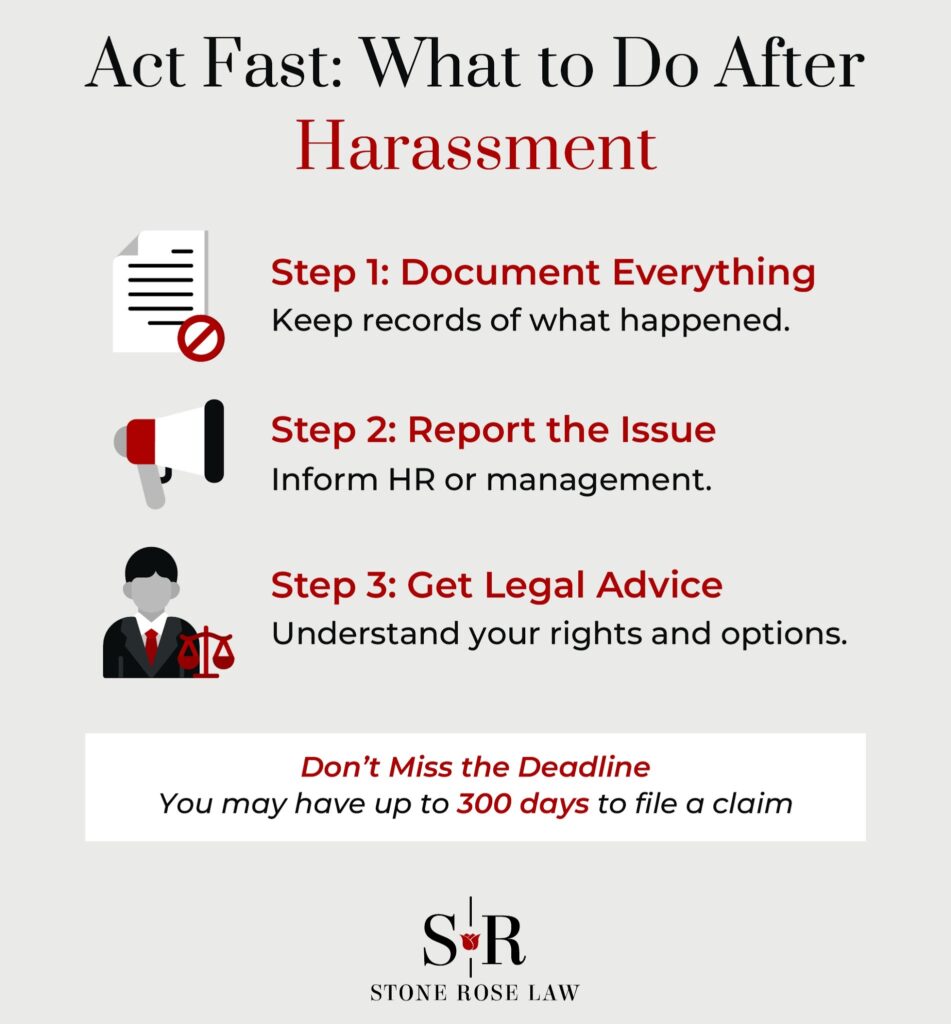
Employees should usually review the employee handbook and, when possible, follow the employer’s internal complaint procedures. That often means reporting sexual harassment to HR, management, or another designated contact.
Internal reporting gives the employer notice and creates a record of the complaint. It may also affect whether the employer had an opportunity to investigate and correct the problem.
That does not mean every employee should report without first thinking through the situation. If there are safety concerns, a real risk of retaliation, or uncertainty about how to proceed, it may make sense to seek legal advice first.
A workplace sexual harassment lawyer can evaluate whether conduct may support a claim for same-sex harassment, retaliation, or other employment discrimination under federal law, Arizona law, or both.
Federal law and Arizona law may both matter in a same-sex harassment case. Title VII prohibits workplace sexual harassment by covered employers and also prohibits retaliation against employees who report sexual harassment or participate in an investigation.
Arizona employees may also pursue claims through the Arizona Civil Rights Division. Depending on the facts, the claim may proceed through the EEOC, the Arizona Civil Rights Division, or both.
A same-sex harassment lawyer can determine which agency process applies, whether the employer is covered, and what filing requirements must be completed before a lawsuit may be filed.
Employees should not assume that internal reporting alone preserves all legal rights. Administrative deadlines still matter.
In Arizona, employees often have up to 300 days from the date of the harassment or retaliatory act to file a charge with the Equal Employment Opportunity Commission, because the state has its own anti-discrimination agency.
Filing deadlines are strict, and missing them can damage or eliminate a claim. Employees should not wait until records are harder to find or deadlines are close.
A same-sex harassment lawyer can determine the correct filing path, the applicable deadline, and whether the facts support a charge with the EEOC, the Arizona Civil Rights Division, or both.
A successful sexual harassment claim may allow an employee to recover lost wages, back pay, compensatory damages, and, in some cases, punitive damages.
Depending on the claim and the outcome, other relief may include reinstatement, front pay, attorney fees, and other remedies allowed by law.
Federal law places caps on compensatory and punitive damages under Title VII. The combined cap is based on the employer’s size, from $50,000 for employers with 15–100 employees up to $300,000 for employers with more than 500 employees. Back pay, front pay, and attorney fees are not subject to these caps.
The available recovery depends on the legal theory, the employer, and the facts. A same-sex harassment lawyer can explain what forms of relief may be available, whether an employee may recover damages, and what proof may be needed.
Documentation is often critical in sexual harassment cases. Employees experiencing harassment should keep detailed records of dates, times, locations, what happened, and who witnessed it.
It is also important to preserve emails, text messages, work chats, written complaints, performance reviews, disciplinary records, and any employer responses.
Many sexual harassment claims turn on documentation and proof. A clear record can help show what happened, whether the conduct was repeated, whether it was reported, and how the employer responded.
An experienced employment attorney can help identify which records matter most and how to preserve them during the legal process.
Once sexual harassment is reported, an employer is generally expected to conduct a prompt, fair, and thorough investigation.
That means the employer should take the complaint seriously, gather facts, interview relevant witnesses, review available documents, and take appropriate corrective action where needed.
An employer should not ignore the report, delay without reason, or leave the employee exposed to continued harassment.
A harassment lawyer may evaluate whether the employer responded properly, whether the investigation was adequate, and whether the response complied with state or federal law.
An employer may not retaliate against an employee for reporting sexual harassment or participating in an investigation.
Retaliation may include suspension without pay, demotion, termination, a forced schedule change, transfer to a less convenient worksite, reduced hours, negative performance reviews, or other adverse action.
Employees have the right to report harassment without being punished for doing so. If the employer responds by worsening the employee’s working conditions, that may support a retaliation claim.
A same-sex harassment lawyer can evaluate whether there is evidence of retaliation and whether that claim should be pursued alongside the underlying harassment claim.
A same-sex harassment lawyer can evaluate whether workplace conduct may support a claim for sexual harassment, retaliation, or other employment discrimination under federal law, Arizona law, or both. That includes assessing the conduct, the employer’s response, and whether the facts support a legal claim.
A lawyer can also help preserve evidence, review internal complaint procedures, and determine the next steps. Depending on the facts, that may include internal reporting, an agency charge, settlement discussions, or litigation.
Because these cases often involve overlapping legal theories and filing requirements, early legal advice can help preserve evidence, avoid deadline problems, and protect the strongest path forward.
Same-sex harassment can violate workplace harassment law when the conduct is unwelcome and severe or pervasive enough to affect the terms and conditions of employment. Employees may also have separate claims if an employer failed to respond appropriately or retaliated after a report was filed.
Stone Rose Law represents employees in Phoenix, AZ, Maricopa County, and across Arizona in workplace sexual harassment and employment discrimination matters.
If you need to speak with a Phoenix sexual harassment lawyer or same-sex harassment lawyer, call Stone Rose Law at (480) 535-9003 or use our online contact form.