
Quid pro quo sexual harassment happens when a supervisor or authority figure demands sexual favors in exchange for a job benefit or threatens negative consequences if the employee refuses. This type of conduct can take many forms, including sexual assault.
If you are dealing with this type of harassment at work or during the hiring process, you do not have to handle it alone. Call Stone Rose Law at (480) 535-9003 to speak with a sexual harassment attorney who can explain your rights and help you take action.
Quid pro quo sexual harassment is a form of workplace sexual harassment prohibited under federal and state laws.
The phrase “quid pro quo” is a Latin term meaning “this for that.” In an employment setting, it refers to a situation where job benefits are conditioned on sexual conduct.
This type of harassment typically involves someone in a supervisory position who has authority over employment decisions. The harasser may be a manager, supervisor, company executive, or anyone with control over hiring, firing, promotions, pay, schedules, or assignments.
Sexual harassment can affect employees, job applicants, and even independent contractors in certain situations. It can occur regardless of the gender of the victim or the harasser.
Quid pro quo sexual harassment means that sexual favors are directly tied to employment outcomes. The request does not need to be explicit. Implicit demands, suggestions, or changes in treatment after a refusal can still qualify.
Examples of this type of sexual harassment include situations where:
In each case, the employee’s job status or benefits are conditioned on submission to sexual conduct.
Quid pro quo sexual harassment is prohibited under federal and state laws, including:
The Equal Employment Opportunity Commission enforces federal laws against sexual harassment and allows employees to file claims within specific deadlines.
Title VII of the Civil Rights Act of 1964 prohibits discrimination based on sex in the workplace. Quid pro quo sexual harassment is considered a form of sex discrimination because employment decisions are based on sexual conduct rather than job performance.
Under federal law, employers can be held legally responsible when a supervisor engages in quid pro quo harassment. This is true even if the employer claims to have been unaware of the conduct.
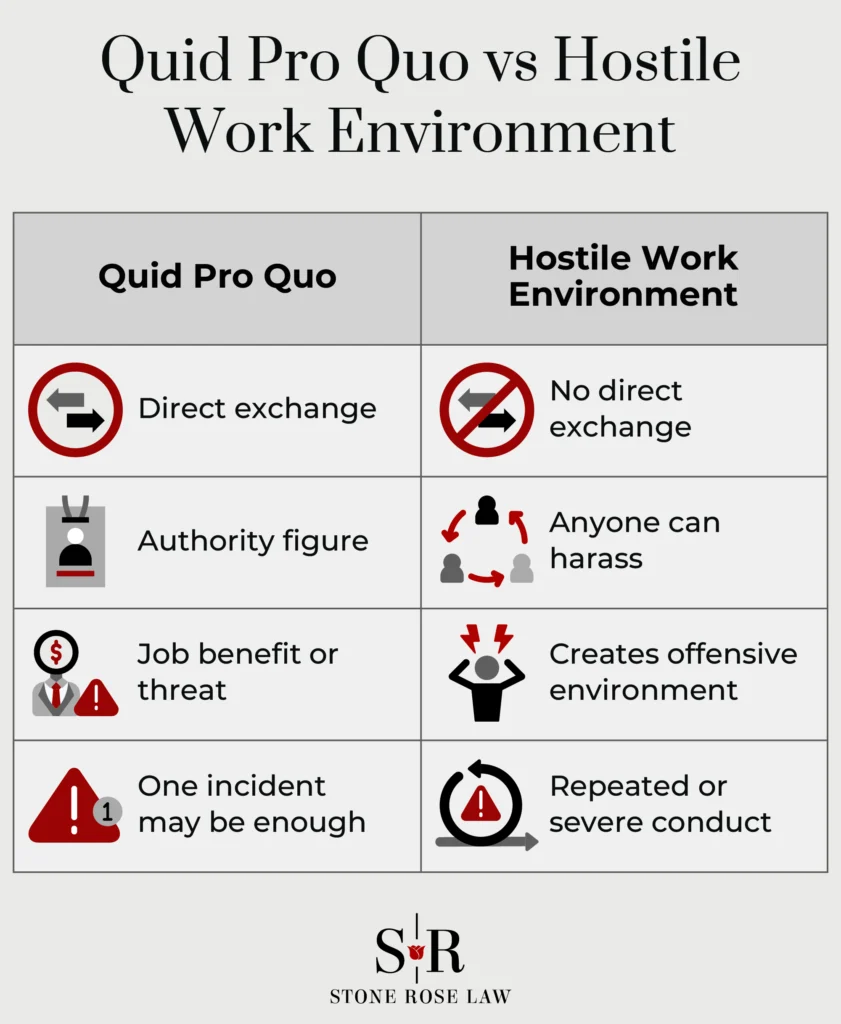
Quid pro quo sexual harassment is one of two types of sexual harassment recognized under Title VII of the Civil Rights Act. The other type is hostile work environment harassment.
Quid pro quo harassment focuses on a direct exchange. The employee is asked to provide sexual favors to receive a job benefit or avoid punishment.
Hostile work environment harassment involves unwanted sexual behavior that is severe or pervasive enough to create an offensive work environment.
Hostile work environment sexual harassment may include inappropriate comments toward other employees, conduct or remarks based on a protected class, workplace discrimination based on sex, unwelcome sexual advances, or other conduct that is severe or pervasive enough to interfere with an employee’s ability to work.
Unlike quid pro quo harassment, these actions are not tied to the promise of employment benefits or the threat of job-related consequences.
Both forms of harassment are illegal, and both can occur in the same workplace or involve the same alleged harasser.
Quid pro quo sexual harassment almost always involves someone with authority. This may include:
The key factor is whether the alleged harasser had the authority to affect the employee’s job benefits or employment status.
Quid pro quo harassment can happen even before employment begins. Job applicants may experience harassment during the interview or recruitment process.
Examples include:
Job applicants have the same legal protections as employees under federal law.
Quid pro quo harassment often involves unwanted sexual advances or behavior of a sexual nature. This may include:
The conduct does not need to involve physical contact to be unlawful.
A critical element of quid pro quo sexual harassment is the impact on employment. The employee must show that refusing sexual advances led to negative consequences, such as:
Even subtle changes in treatment can support a quid pro quo claim if they are tied to a refusal.
To succeed on a quid pro quo sexual harassment claim, the plaintiff must generally prove:
Documentation and evidence play a critical role in meeting this burden.
Employees experiencing quid pro quo sexual harassment should document every incident. A detailed record strengthens a sexual harassment claim.
Important information to record includes:
Keeping this information private and secure is important.
Employees should report harassment internally when possible. This may include reporting to:
Submitting the complaint in writing helps create a paper trail. If internal reporting is unsafe or ineffective, legal counsel can advise on next steps.
Before filing a lawsuit, employees must usually file a charge with a state or federal agency.
In Arizona, this may involve filing with:
Strict deadlines apply. In many cases, employees have 180 days to file a charge; however, some situations allow up to 300 days, depending on the circumstances.
Victims of quid pro quo sexual harassment may be eligible to recover damages, including:
The availability of damages depends on the facts of the case and the applicable laws.
Employers are often legally responsible for quid pro quo harassment committed by supervisors. This responsibility remains even if the employer claims to have policies in place.
Failure to act after learning of harassment can increase employer liability.
Quid pro quo sexual harassment cases are complex and fact-specific. An experienced sexual harassment attorney can help by:
Legal guidance is especially important when retaliation, termination, or ongoing harassment is involved.
You should contact an attorney immediately if:
Early legal advice can help protect your rights and preserve critical evidence.
Quid pro quo sexual harassment is illegal, harmful, and never acceptable. If a supervisor or authority figure has pressured you for sexual favors or punished you for refusing, legal help is available.
Call Stone Rose Law at (480) 535-9003 to speak with a sexual harassment attorney. We can explain your options, assist you in filing a claim, and work to hold your employer accountable for any unlawful conduct.