
If you’ve recently been laid off or terminated, your employer may offer you a severance agreement. This legal document outlines the terms of your separation and the compensation or benefits you may receive in exchange for waiving certain rights.
Before you sign, it’s critical to understand the content of a severance agreement, how it affects your legal options, and why consulting with an employment attorney at Stone Rose Law can protect your future.If you’ve received a severance offer, call (480) 535-9003 today to speak with an experienced employment lawyer in Arizona.
A severance agreement is a contract between an employer and an employee that governs the terms of separation when employment ends. It often involves the employer providing compensation, continued benefits, or other support in exchange for the employee agreeing not to pursue legal claims or take other actions against the company.
These agreements are common in layoffs, reductions in force, or even terminations involving workplace disputes. They aim to create a clean break and protect both parties from future legal battles.
However, because signing one usually means giving up important rights, it’s crucial to review it carefully.
The primary purpose of a severance agreement is to protect the employer from legal risk. In exchange for severance money or benefits, the employee agrees not to sue for claims like wrongful termination, discrimination, or sexual harassment.
This is typically done through a general release of claims, which waives your right to bring legal action based on your employment relationship.
For employees, severance agreements can provide financial stability during a job search, help maintain health insurance coverage, and sometimes offer additional resources like career coaching or outplacement services.
Severance pay is money paid to a departing employee beyond their final paycheck. It’s typically offered as a lump sum or in installments and may be calculated based on:
Severance pay is not required under federal law or Arizona law in most cases. Unless your employment contract, a collective bargaining agreement, or company policy guarantees it, your employer chooses whether to offer severance.
A severance package is the total set of benefits offered as part of the agreement. It can include more than just money.
Common components include:
Each of these terms carries legal consequences. You should understand how they affect your rights before agreeing to them.
Severance benefits often extend beyond a paycheck.
Health insurance is a major concern for many departing employees. Employers may offer continued coverage for a certain period, or they may subsidize COBRA premiums.
Other benefits could include payment for unused vacation days, continuation of life insurance, or pension-related options.
These benefits can bridge the gap between jobs, but they’re often contingent on signing the agreement. If you don’t sign, you may forfeit them.
Severance payments are considered taxable income and can affect your net pay, tax bracket, and eligibility for benefits. Employers may withhold taxes at a flat rate for lump-sum payments, which can reduce the immediate cash you receive.
Other timing and contractual provisions can influence when and how you receive severance, including payment schedules or deadlines set by your employer. Understanding these factors is important because they can affect the actual value of your severance package and any legal rights you may be waiving.
Consulting with an employment lawyer can help you evaluate tax treatment, payment timing, and how the package compares to potential claims or settlements.
From the employer’s perspective, severance agreements limit legal exposure and preserve company reputation. By resolving disputes before they start, employers can avoid costly litigation over discrimination, retaliation, wrongful termination, or violations of the WARN Act.
They may also use severance contracts to enforce restrictive covenants, protect trade secrets, and manage transitions with minimal disruption.
It can be tempting to sign quickly, especially if you need the severance pay. However, signing without understanding the terms could cost you significant legal rights.
Most agreements require you to waive claims against your former employer, including potential claims you haven’t discovered yet.
Before signing, carefully review:
Because these agreements are binding, speak with an employment attorney before signing. They can identify hidden legal risks, negotiate better terms, or advise you if signing is not in your best interest.
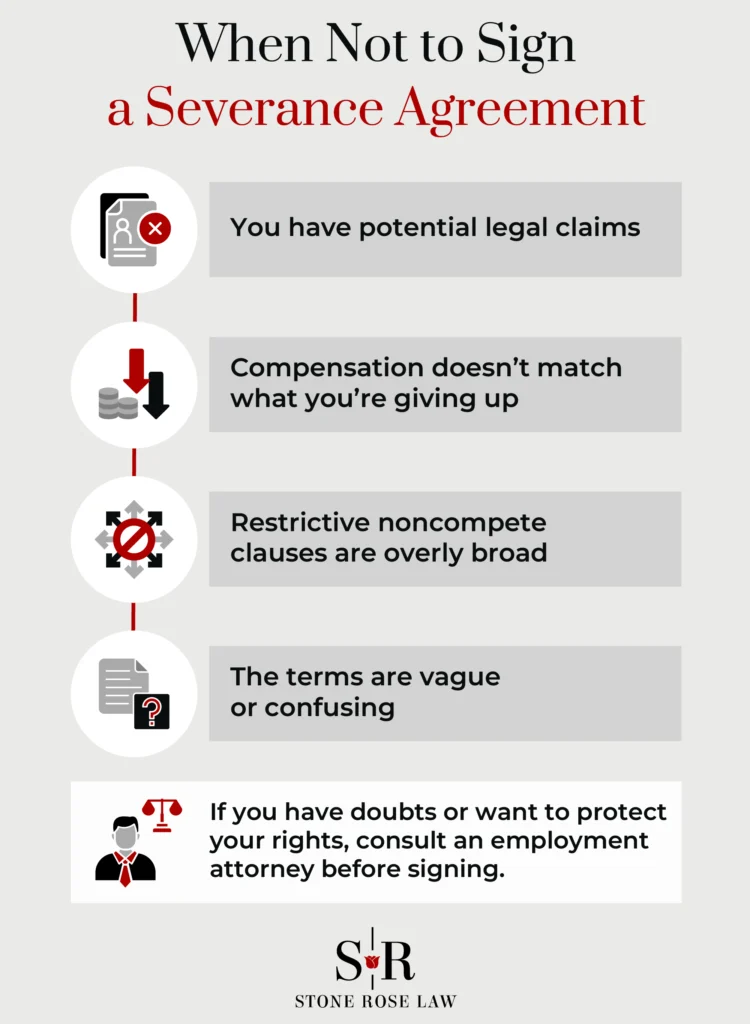
There are situations where signing might not make sense, such as:
A lawyer can evaluate your agreement in context and advise you as to whether signing is advisable.
Arizona does not impose a state-specific deadline for signing a severance agreement. The timeline is generally determined by the terms set in the agreement itself, which apply to all employees regardless of age.
For employees who are 40 or older, the federal Older Workers Benefit Protection Act (OWBPA) provides additional protections. If the agreement includes a waiver of age discrimination claims, employees must be given at least 21 days to consider the agreement and a seven-day period after signing to revoke their acceptance.
These rules do not apply to employees under the age of 40.
Other federal or contractual factors can also influence the timeline. While no other federal law sets a specific signing deadline, laws such as the WARN Act govern notice periods for mass layoffs or plant closings, which can affect when severance offers are made.
Employers may include contractual deadlines for accepting or revoking a severance agreement, which are enforceable as long as they do not conflict with OWBPA protections. Revocation periods for employees under 40 are purely at the employer’s discretion.
Because severance agreements can include deadlines for acceptance, revocation, or payment, it is important to read your document carefully to understand the exact timelines that apply to you.
If you were terminated unlawfully—for example, in retaliation for reporting misconduct or due to discrimination—signing a severance agreement may prevent you from pursuing legal claims. Employers may attempt to resolve potential disputes by offering severance money in exchange for a release of claims.
Before you waive your right to legal action, consult an employment attorney. They can assess whether you have grounds for a wrongful termination claim and whether accepting the severance offer is truly in your best interest.
Severance agreements operate at the intersection of contract law and employment law. Federal law, state law, and common law principles all shape how these agreements are interpreted and enforced.
Key laws that may affect your severance agreement include:
Because these agreements are legally binding, a court order may enforce them if disputes arise.
Many severance agreements include restrictive covenants, such as:
Arizona courts scrutinize restrictive covenants to ensure they are reasonable in scope and duration. Overly broad restrictions may be unenforceable, but they can still complicate your job search. Review these terms carefully with legal counsel.
If your employment ended after you reported sexual harassment, a severance agreement could include a waiver of harassment-related claims. Employers often attempt to resolve these disputes quietly through severance packages.
Do not sign away your rights without understanding what you’re giving up. A lawyer can help you decide whether to pursue legal action instead of accepting the offer.
You are not required to accept the employer’s offer as-is. Severance agreements are negotiable, especially if you have leverage through potential legal claims or valuable institutional knowledge.
Common areas for negotiation include:
Having an attorney handle negotiations signals to your former employer that you understand your rights and expect fair treatment.
Signing a severance agreement usually does not affect your eligibility for unemployment benefits. However, if the agreement characterizes your separation as a voluntary resignation, it could complicate your claim.
Your attorney can review the language to protect your eligibility.
In addition to statutory law, common law contract principles govern severance agreements. Courts look at factors like offer, acceptance, consideration, and mutual assent. They may refuse to enforce agreements signed under duress or those that violate public policy.
Understanding how common law applies helps ensure your agreement is fair and enforceable.
Because severance agreements involve complex legal rights, consulting an employment attorney is essential. A lawyer can:
Stone Rose Law regularly helps employees in Arizona navigate severance agreements and protect their rights. Before signing anything, speak to an attorney to discuss your options.
A severance agreement can provide important financial support after job loss, but it can also require you to give up valuable legal rights. Signing without understanding the terms may limit your ability to pursue claims for wrongful termination, discrimination, or harassment.
Before you sign anything, review the agreement with an experienced employment lawyer. The attorneys at Stone Rose Law can explain your options, negotiate for better terms, and protect your rights under Arizona and federal law.
If you’ve received a severance offer, call (480) 535-9003 today to schedule a consultation.