In many cases, you can be fired for posting on social media, especially if your content violates company policy, breaches confidentiality, or harms your employer’s reputation. Most employment in Arizona is “at will,” which means your employer doesn’t need a reason to terminate you.
That said, there are still legal limits. Some online speech is protected under federal labor laws, anti-discrimination rules, and state regulations.
If you’re facing disciplinary action or have been fired for your social media activity, contact Stone Rose Law at (480) 535-9003. Our Arizona employment law attorneys can help you understand your rights and options.
Firing an employee for social media content has become increasingly common. Whether it’s a TikTok during work hours or a controversial opinion on X (formerly Twitter), online conduct can impact your professional life.
Employers may discipline or terminate employees for social media posts if:
Each of these scenarios can justify disciplinary action, especially if outlined in a company’s social media policy or employee handbook.
Arizona is an at-will employment state. Under the at-will doctrine, employers can fire employees for nearly any reason (or no reason at all), unless the firing violates specific laws.
Private employers can generally fire employees for what they post online. Exceptions may apply when:
This means that unless your social media post is protected by law, you can be terminated without warning. Consult an employment lawyer if you believe your firing was unlawful.
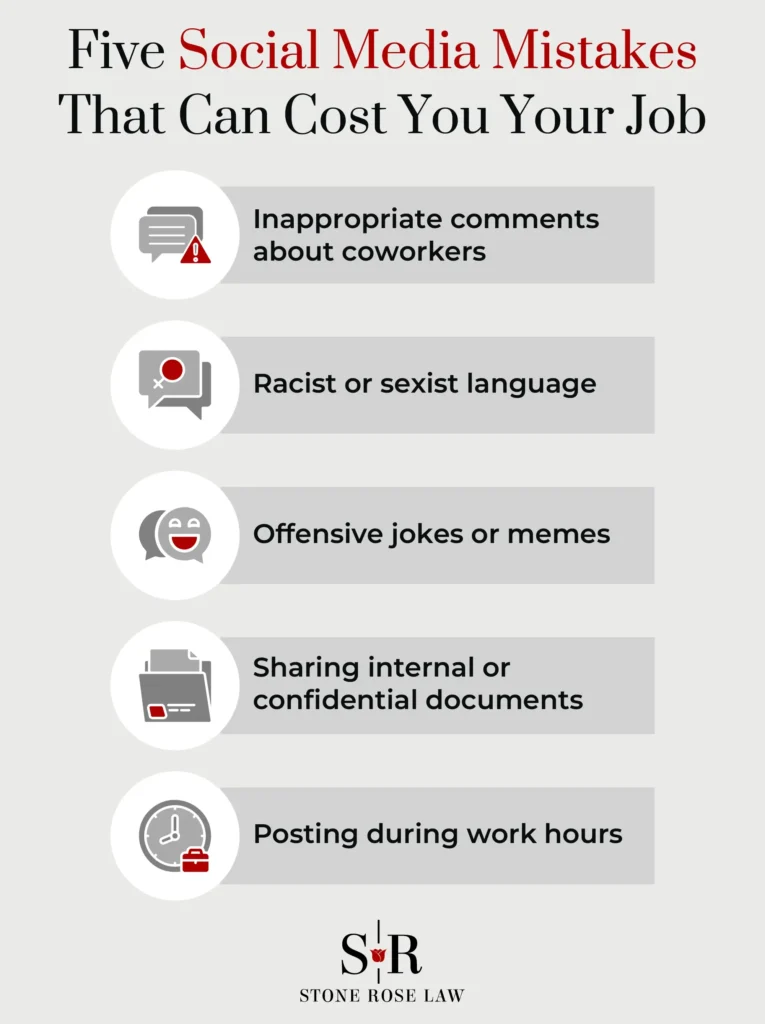
Social media misconduct refers to any online behavior that breaches company rules or damages the employer’s reputation. This includes:
Such posts can violate company policies and may result in disciplinary action or termination.
Most companies include guidelines in their employee handbook that outline acceptable social media activity. These rules may limit what employees can post, even on personal accounts.
Always review your employee handbook before assuming your private posts are protected.
Your employer’s social media policy plays a major role in determining whether your posts can lead to termination. These policies typically cover:
Violating a clearly stated policy gives employers a stronger legal footing to terminate.
Posts that use hate speech, discriminatory language, or create a hostile work environment can be grounds for termination. Employers have a duty to maintain workplace safety and prevent harassment, even if it occurs online.
Sharing confidential information, client details, or proprietary processes can justify termination. Examples include:
These actions may also expose you to legal liability beyond being fired.
It’s a common misconception that personal accounts are shielded from employer oversight.
Even if your account is private, screenshots can be shared. Employers also use screening tools to monitor online content.
Employers can take disciplinary action when an employee’s online behavior violates company policy, jeopardizes workplace safety, or damages the company’s public image. The following examples are based on real incidents and common scenarios that highlight how social media activity can lead to employment consequences.
A Detroit EMT posted a selfie from inside an ambulance with a patient visible in the background. The company terminated the employee for violating HIPAA and internal confidentiality policies. The termination was upheld as lawful.
Many employees have been terminated for posting inflammatory political or discriminatory remarks on personal social media accounts. Even when shared outside of work hours, these posts were considered inconsistent with company values and damaging to the employer’s reputation.
Some forms of speech receive limited legal protection, and in some instances, employees have successfully challenged their terminations when employers overstepped legal boundaries.
The National Labor Relations Act protects “concerted activities,” such as discussing wages, hours, or work conditions with coworkers. Posts that reflect collective workplace concerns may be protected from employer retaliation.
For example, in one notable case, two employees were fired from a sports bar after criticizing their employer on Facebook about paycheck issues.
The National Labor Relations Board ruled that the posts were protected activity and ordered the employees reinstated.
Free speech rights under the First Amendment apply to government actions, not private employers. Your employer is generally not restricted by the Constitution when it comes to disciplining or firing you for speech.
That said, some states provide limited protections for off-duty conduct or political activity. Arizona does not have strong protections in this area.
Avoiding social media misconduct requires awareness and restraint. To protect yourself, consider the following tips:
Following these steps can help you maintain a clear boundary between your professional and personal life, reducing the risk of disciplinary action for online behavior.
If you’ve been fired for posting on social media, you may have legal claims if:
An experienced attorney can help you identify whether your rights were violated.
Employment lawyers can play a key role in protecting your rights when workplace social media issues arise. An employment law attorney can help you:
Working with a qualified attorney ensures you understand your legal options and strengthens your position when addressing disputes over online conduct.
Don’t wait until the situation escalates. If you’ve been warned about your online behavior or suspect your employer is monitoring you, seek legal guidance.
Legal protections vary based on your job, industry, and the content of your post. A qualified attorney can help you assess the risks and next steps.
If you’ve been fired for social media posts or are facing disciplinary action because of your online activity, call Stone Rose Law at (480) 535-9003. Our experienced employment law attorneys can help you understand your rights, challenge wrongful termination, and protect your future.