
Yelling at work is not automatically illegal. The legal issue is whether the conduct became serious enough to affect working conditions, involved discrimination, or followed a complaint about unlawful treatment.
A raised voice during a stressful situation is different from threats, insults, or public humiliation directed at one employee. In workplace harassment cases, context matters.
Courts and agencies usually look at pattern, severity, and whether the conduct was tied to a protected characteristic or retaliation.
Yelling may support a claim when it becomes part of verbal harassment, a hostile work environment, discrimination, or retaliation.
If yelling, threats, or ongoing verbal abuse are creating problems at work, Stone Rose Law can evaluate whether the facts may support a legal claim. Call Stone Rose Law at (480) 535-9003 or use our online contact form to speak with an employment lawyer.
Verbal harassment refers to spoken conduct used to intimidate, degrade, humiliate, or threaten another person. It may include yelling, insults, slurs, name-calling, offensive jokes, inappropriate comments, false accusations, or repeated criticism delivered in an abusive way.
Verbal harassment may come from a supervisor, manager, coworker, client, or customer.
Verbal abuse usually refers to especially aggressive or demeaning conduct, in a workplace setting, that may include screaming, profanity, threats, humiliation, or repeated attacks on a person’s competence.
Examples may include:
One incident may be inappropriate without giving rise to a legal claim. Repeated conduct usually creates a stronger issue.
Yelling may become harassment when it is repeated, targeted, threatening, or tied to discriminatory treatment.
Relevant factors often include:
That is why whether the conduct is unlawful depends on more than tone or volume alone.
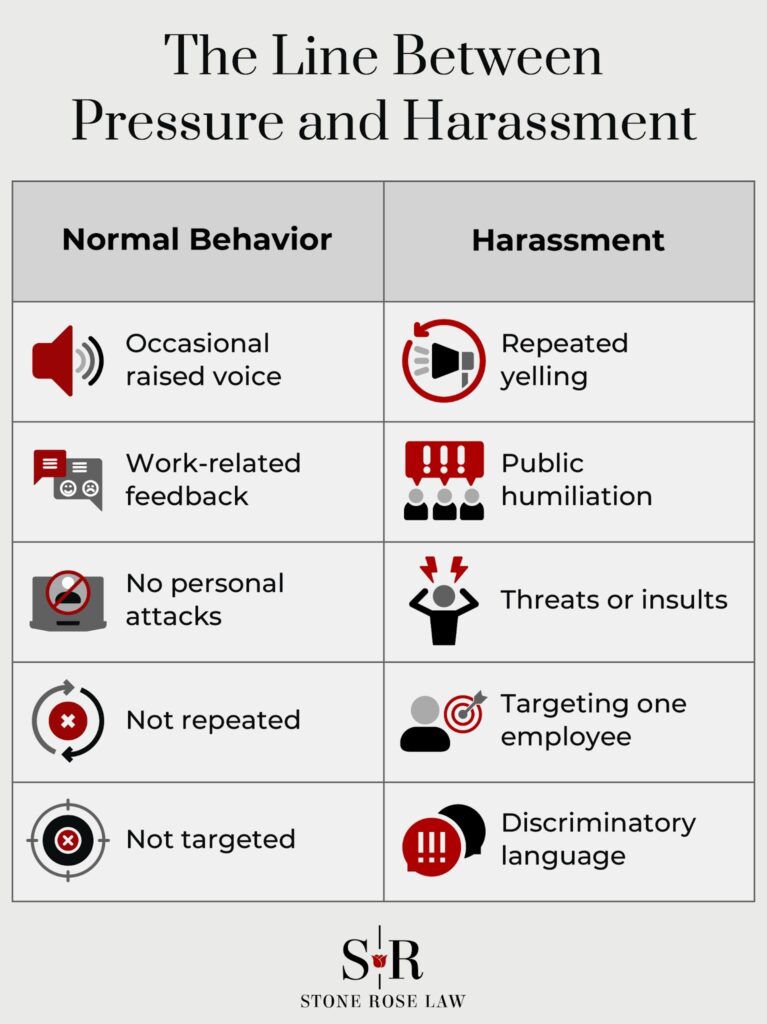
A raised voice by itself does not automatically qualify as verbal abuse. Some workplaces are fast-paced, and some conversations become tense.
The issue changes when yelling becomes aggressive, humiliating, or repetitive.
A manager who routinely screams at one employee in front of others presents a very different situation from a single heated discussion. Frequency, setting, and purpose all matter.
Repeated, targeted yelling at one employee may qualify as harassment, especially when it includes humiliation, threats, or abusive language.
An isolated correction usually is not enough. A pattern of screaming, insults, and public humiliation may be.
A coworker’s yelling can still constitute harassment. The fact that the person is not a supervisor does not absolve the employer of its responsibility.
Once management knows, or should know, that repeated yelling, threats, or discriminatory conduct is happening, the employer may have a duty to address it.
This is one reason internal complaints matter. If the employer had notice and failed to act, that can become part of the case.
Supervisors are allowed to direct employees, address mistakes, and discuss performance problems. The law does not require managers to be polite at all times.
The issue is when supervision turns into intimidation, threats, or discriminatory conduct.
Legal exposure increases when yelling overlaps with discrimination. Federal and state law prohibit harassment based on protected traits and retaliation for protected activity.
Yelling may become unlawful when:
In other words, the legal issue usually depends on how the conduct functions in the workplace, not volume alone.
Some conduct may be inappropriate or unprofessional, even if it does not meet the legal standard for harassment.
That is often the case when:
That behavior may still violate company policy and justify a report to human resources. It may not, on its own, support a legal claim.
In yelling cases, the hostile work environment analysis usually focuses on:
One event may be enough if it is extremely severe. More often, these claims depend on repeated conduct over time.
Courts usually apply a reasonable person standard when analyzing harassment claims. They ask whether a reasonable person in the employee’s position would view the conduct as hostile or abusive.
This matters because employers often describe repeated yelling as management style or workplace pressure.
However, that explanation does not control the analysis. The law looks at the situation objectively, using the actual workplace context.
Yelling becomes more serious when it includes discriminatory language or targets someone because of a protected characteristic. At that point, the issue may involve unlawful harassment or discrimination rather than general workplace hostility.
Examples may include:
When discriminatory content is part of the conduct, the case may fall under federal or state anti-discrimination law.
Sexual harassment does not have to involve physical contact. Verbal conduct may be enough when it is severe or pervasive.
Yelling may become part of sexual harassment when a supervisor or coworker uses sexually degrading language, screams gender-based insults, or responds with hostility after someone rejects or reports inappropriate conduct.
Name-calling and profanity do not automatically create legal liability. Even so, repeated profanity directed at one employee, especially in public or in a humiliating manner, can be significant evidence.
Public humiliation also matters. A manager who repeatedly screams at an employee in meetings, in front of clients, or in common work areas may help create a hostile environment even without using slurs.
Workplace bullying is not always illegal by itself. Still, it often overlaps with conduct that creates legal risk, especially when the behavior involves discrimination, retaliation, or severe harassment.
Bullying behavior may include:
Even when bullying does not support a separate legal claim, it may violate company policy and strengthen other claims based on the overall pattern of conduct.
Employment law generally protects workers from harassment and discrimination based on protected characteristics such as race, color, religion, sex, national origin, disability, age, and other categories covered by federal or state law. It also protects employees from retaliation for reporting unlawful conduct or participating in protected processes.
The legal issue usually involves one or more of the following:
Without one of those elements, the problem may still be real, but it may not fit a legal claim.
Retaliation can become a separate claim. An employer cannot lawfully punish an employee for reporting discrimination, harassment, or other protected concerns.
Examples may include:
In some cases, the retaliation claim becomes central to the dispute, especially when the employer’s response to the complaint creates additional evidence.
Repeated yelling can affect more than morale. Employees who are regularly screamed at may experience anxiety, sleep disruption, burnout, concentration problems, panic symptoms, or other stress-related effects.
These effects can also help explain how the conduct interfered with work.
Employees may stop raising concerns, avoid communication, make more mistakes, or disengage from their jobs. That workplace impact often matters in hostile work environment cases.
Documentation matters in yelling cases because the dispute often turns on pattern, frequency, and exact wording.
Employees should document:
Consistent documentation can help establish severity, repetition, and credibility.
Employees dealing with repeated yelling, threats, discriminatory language, or abusive treatment should usually report the conduct through internal complaint channels. That may mean human resources, a supervisor, a reporting hotline, or another process identified in the employer’s policy.
A report should explain what happened, when it happened, who was involved, who witnessed it, and whether the conduct had happened before. If the employer receives notice and fails to respond appropriately, that failure may become legally significant.
When yelling is part of discrimination, harassment, or retaliation, an employee may need to file a charge with the Equal Employment Opportunity Commission before filing suit under federal law.
In Arizona, an employee generally has up to 300 days from the most recent discriminatory act to file an EEOC charge when state law also covers the conduct. After a charge is filed, the agency may investigate, request information, or offer mediation.
If the EEOC issues a Notice of Right to Sue, the employee generally has 90 days to file suit in federal or state court.
Meeting deadlines is crucial. Missing them can limit or eliminate legal options.
Employers often argue that yelling was not harassment. Common defenses include:
Those arguments sometimes succeed. They are less effective when the facts show repeated abuse, discriminatory language, ignored complaints, or retaliation.
Legal options depend on the facts. Some employees may have claims for harassment, discrimination, retaliation, or failure to address unlawful conduct.
The right legal theory depends on the overall pattern. Some cases involve ordinary workplace conflict. Others involve repeated yelling, public humiliation, discriminatory abuse, and retaliation together.
Possible remedies may include lost wages, reinstatement, damages for emotional distress, and, in some cases, punitive damages.
Repeated screaming, threats, humiliation, discriminatory language, and verbal abuse can cross the line into harassment when the conduct becomes severe or pervasive, targets a protected group, or follows protected complaints.
Employees dealing with constant verbal abuse should document incidents, report the conduct, and pay close attention to legal deadlines.If yelling, workplace bullying, or verbal harassment is affecting your work environment, Stone Rose Law can evaluate the facts and explain the available legal options. Call Stone Rose Law at (480) 535-9003 or use our online contact form to speak with an employment lawyer.