
Sexual jokes at work can sometimes cross the line from humor into unlawful conduct. In many workplaces, casual joking may seem harmless, but sexual jokes in the workplace can become a form of harassment when they are unwelcome and contribute to an offensive or hostile work environment.
Both federal law and Arizona law recognize that verbal behavior, including jokes, comments, and suggestive remarks, can constitute workplace sexual harassment. Whether a particular joke violates the law depends on factors such as how often the behavior occurs, who it is directed at, and whether it creates an uncomfortable or hostile workplace.
If sexual harassment jokes are happening at work, an employment attorney can help evaluate whether the conduct is legally actionable and how to document it. Call Stone Rose Law at (480) 535-9003 to speak with an employment lawyer.
Sexual harassment is a form of sex-based discrimination under Title VII of the Civil Rights Act of 1964 and the Arizona Civil Rights Act. These laws prohibit harassment in the workplace when conduct related to sex interferes with an employee’s ability to work or creates an abusive environment.
Courts generally recognize two main categories of workplace sexual harassment.
Most sexual jokes in the workplace fall into the second category. When jokes, comments, or suggestive remarks become frequent or demeaning, they can contribute to workplace harassment.
Sexual jokes in the workplace often involve humor that references sex, relationships, or physical appearance. These jokes may appear during casual conversations, group chats, emails, or social interactions among coworkers.
Common examples of workplace sexual jokes include:
Sexual jokes targeting specific genders or sexual orientations may support a harassment claim because they reinforce discriminatory attitudes in the workplace.
Not every inappropriate joke automatically qualifies as sexual harassment under the law. Courts look at the broader context to determine whether the conduct rises to the level of unlawful workplace harassment.
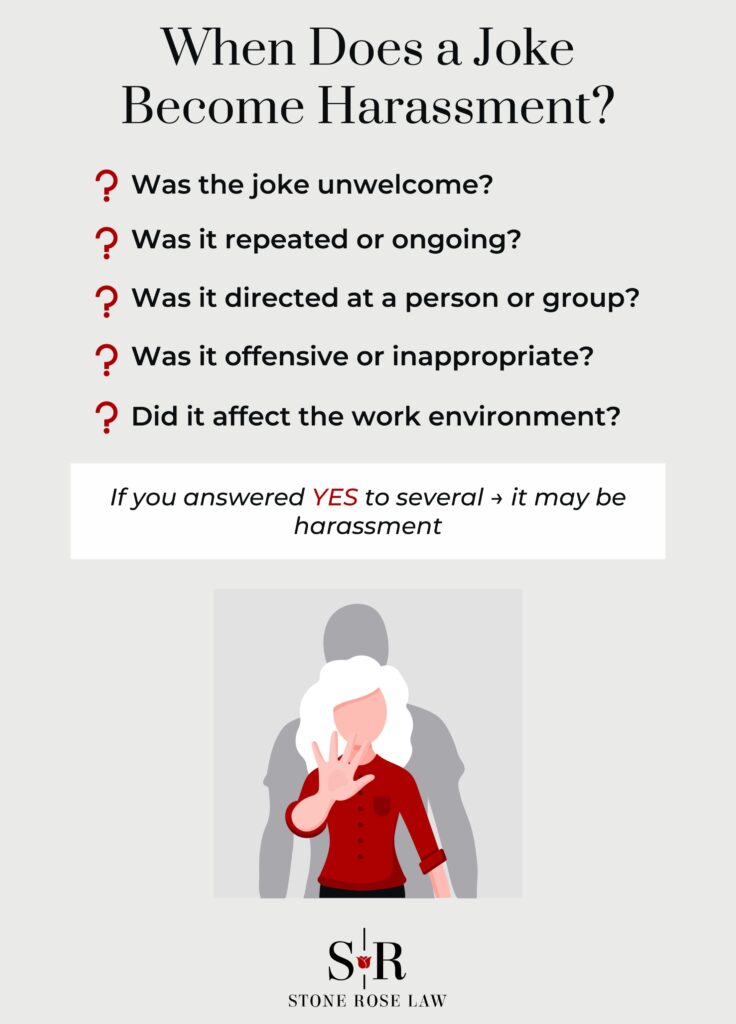
Sexual jokes may be considered sexual harassment when they are:
In many cases, a pattern of repeated sexual jokes or suggestive comments is required to establish a hostile work environment. However, a single incident can sometimes qualify if the behavior is particularly severe.
A hostile work environment develops when inappropriate behavior becomes severe or pervasive enough to change the conditions of employment. Sexual jokes can contribute to this type of environment when they normalize disrespectful conduct or blur professional boundaries.
Repeated sexual jokes may cause employees to feel uncomfortable, embarrassed, or isolated at work. Witnessing demeaning jokes can also affect coworkers who are not the direct target.
Workers exposed to ongoing inappropriate jokes may experience:
When employers allow such behavior to continue without intervention, the workplace environment can become hostile, in violation of federal and state law.
Sexual harassment jokes can take many forms. In some situations, the humor may appear subtle at first but become increasingly offensive over time.
Examples of inappropriate workplace jokes include:
Even when the behavior is framed as humor, repeated exposure to offensive jokes can create an uncomfortable work environment.
Inappropriate workplace jokes can affect employees in ways that go beyond momentary discomfort. Persistent exposure to demeaning humor can damage employee morale and undermine a respectful workplace culture.
Workers subjected to sexual jokes may feel isolated, pressured to laugh along, or reluctant to speak up about inappropriate behavior. Fear of retaliation may prevent employees from reporting incidents to supervisors or the human resources department.
Sexual jokes can also normalize harassment, making it harder for workers to recognize or challenge more serious misconduct.
Research on workplace harassment shows that repeated exposure to offensive behavior can contribute to anxiety, stress, and depression.
Employees who experience sexual harassment may benefit from carefully documenting incidents. Detailed documentation can help demonstrate a pattern of behavior if the situation escalates into a formal complaint or legal claim.
Important details to record may include:
Employees may also consider reporting incidents through the employer’s internal procedures. Many companies require workers to notify a supervisor or the human resources department about workplace harassment.
Employers should conduct a prompt and thorough investigation when harassment is reported.
Employees who experience workplace sexual harassment usually must complete an administrative process before filing a lawsuit. Most claims begin by filing a charge of discrimination with the Equal Employment Opportunity Commission (EEOC) or the Arizona Civil Rights Division.
Timing matters. Under federal law, a charge generally must be filed within 300 days of the most recent incident of harassment when state law also prohibits the conduct. Arizona law also allows employees to file with the Arizona Civil Rights Division, which typically requires filing within 180 days.
Once a charge is submitted, the agency may review the complaint, request information from the employer, or attempt mediation between the parties. Some claims proceed through a formal investigation to determine whether the evidence supports the allegations.
If the agency does not resolve the case, it may issue a Notice of Right to Sue. After receiving this notice, the employee typically has 90 days to file a lawsuit in federal court.
During this process, documentation can play an important role. Records of incidents, emails, messages, witness statements, and prior reports to supervisors or the human resources department may all become relevant evidence.
Employers and accused individuals may raise several defenses in response to a sexual harassment claim involving workplace jokes. These defenses often focus on the nature of the conduct, the employer’s response, and whether the legal standard for harassment has been met.
Common defenses may include:
These defenses depend heavily on the specific facts. They are less effective when there is clear evidence of repeated conduct, of complaints that were ignored, or of behavior that persisted after intervention.
Employers play an important role in preventing workplace harassment. Companies are expected to take proactive measures to maintain a respectful environment for employees.
Effective prevention strategies often include:
When employers ignore reports of inappropriate behavior or fail to address sexual harassment, they may face legal consequences under Title VII and other employment laws.
Sexual jokes in the workplace can have serious legal and professional consequences when they contribute to a hostile or offensive work environment.
Arizona employees facing workplace harassment may benefit from documenting incidents and speaking with an employment attorney. A legal professional can evaluate whether the conduct meets the legal standard for a sexual harassment claim and explain the available options.
If workplace sexual jokes or other inappropriate behavior are creating problems at work, call Stone Rose Law at (480) 535-9003 or fill out our online contact form to speak with an employment lawyer about your situation.