
Losing a job can feel unjust, abrupt, or retaliatory. The law, however, draws a sharp and consequential distinction between a termination that is unfair and one that is wrongful.
The difference between wrongful dismissal vs. unfair dismissal determines whether an employee has enforceable legal rights or no claim at all. In Arizona, many firings feel unfair but remain lawful under at-will employment rules, while others cross specific legal lines and give rise to wrongful termination claims.
If you were fired and need clarity on whether your termination was unlawful under Arizona or federal law, call Stone Rose Law at (480) 535-9003 to speak with an employment attorney.
The core difference between wrongful dismissal vs. unfair dismissal is legality, not fairness.
Wrongful dismissal, often referred to as wrongful termination, is not a single, standalone claim in Arizona. Instead, it describes a termination that violates specific statutes, public policy protections, or enforceable employment contracts.
Unfair dismissal refers to a termination that may be harsh, arbitrary, poorly explained, or unprofessional but does not violate any statute, public policy, or employment contract. Wrongful dismissal occurs when an employer terminates an employee in violation of employment law, public policy, or a binding employment agreement.
This distinction matters because the legal system does not police fairness in employment decisions. Courts evaluate whether the employer broke the law or breached a contractual obligation.
An employee can be treated poorly and still have no legal claim if the termination was lawful. Conversely, a termination that appears routine or business-driven can still be wrongful if it violates protected legal rights.
Most employees in Arizona are employed under at-will employment. At-will employment allows an employer to terminate an employee at any time, for any reason, or for no reason at all, as long as the reason is not illegal and does not violate an employment contract.
At-will employment explains why many terminations that feel unfair are legally permissible. Employers are not required to provide warnings, progressive discipline, or explanations unless a contract or law requires it.
Unfair dismissal describes a termination that appears unreasonable, arbitrary, or lacking justification but does not violate employment law or contractual obligations. Arizona law does not require employers to be fair, consistent, or polite when terminating at-will employees.
Unfair dismissal is a descriptive concept, not a legal one. It reflects how a termination feels to the employee, not whether it violates the law.
Unfair dismissal may include situations such as:
These situations may feel unjust or demoralizing, but they are typically lawful under at-will employment.
Employees generally have no legal grounds to sue for unfair dismissal alone in Arizona. Courts focus on whether the employer violated a statute, public policy, or contract, not whether the employer acted reasonably or compassionately.
This is where confusion often arises.
Many employees assume unfair treatment equals unlawful termination. In reality, the legal system draws a strict boundary between unfairness and illegality.
Wrongful dismissal, also referred to as wrongful termination or unlawful termination, occurs when an employer fires an employee for reasons prohibited by law or in violation of an employment contract. Wrongful dismissal creates enforceable legal rights and may allow an employee to pursue compensation, reinstatement, or other remedies.
Wrongful dismissal claims are rooted in employment law, contract law, and public policy protections.
Employment law limits when and why employers may terminate employees. Even in at-will employment, termination becomes wrongful if it violates federal law, Arizona state law, or established public policy.
Wrongful dismissal claims often involve discrimination, retaliation, whistleblower protections, or contractual breaches.
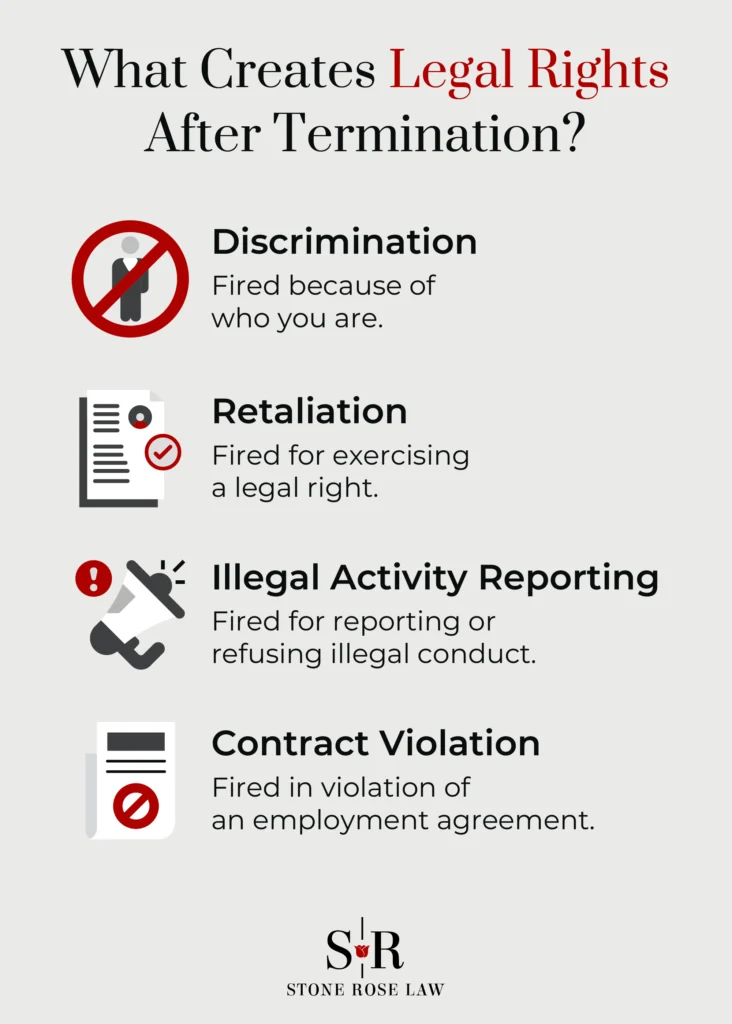
Termination is wrongful if it is based on protected characteristics under federal or Arizona law. Protected characteristics under federal and Arizona law include, among others:
Firing an employee because of any protected characteristic constitutes unlawful termination and may support a wrongful termination claim.
Wrongful dismissal also occurs when an employer fires an employee for exercising legally protected rights. Retaliation claims arise when termination follows protected activity.
Examples include termination after:
Retaliation claims often depend on timing, documentation, and employer knowledge of the protected activity.
Arizona recognizes wrongful termination when an employee is fired for reporting violations of Arizona law or the Arizona Constitution, or for refusing to participate in conduct that would violate Arizona law.
Whistleblower-related wrongful dismissal may involve reporting conduct that violates Arizona law or applicable federal statutes, such as wage and hour violations, occupational safety violations, or other legally protected disclosures.
When these actions involve violations of Arizona law or applicable federal statutes, this can include:
Terminating an employee for engaging in these actions violates public policy and may support a wrongful termination lawsuit.
Wrongful dismissal can also occur when an employer violates an employment contract. Contracts may be written, implied, or created through company policies.
Contract-based wrongful dismissal may involve:
When a contract exists, employers must follow its terms when terminating employment.
At-will employment does not override anti-discrimination laws, retaliation protections, whistleblower statutes, or contractual obligations. Wrongful dismissal claims often arise because employers misunderstand the legal limits of at-will authority.
At-will status provides flexibility, not immunity from employment law.
Some wrongful termination claims in Arizona must be filed within one year under state law, while federal claims often require filing administrative charges within much shorter deadlines.
Missing deadlines can permanently bar otherwise valid claims.
Wrongful termination cases are evidence-driven. Common forms of evidence include:
Legal counsel plays a critical role in identifying, preserving, and presenting evidence.
Potential remedies in wrongful dismissal cases may include:
Available remedies depend on the nature of the violation and the governing law.
Most employment terminations do not lead to legal claims because no law was violated. Understanding the difference between unfair dismissal and wrongful dismissal helps employees avoid wasted effort and focus on viable legal options.
Employment termination disputes are fact-specific and time-sensitive. Legal counsel can assess whether a termination crosses the line into wrongful dismissal and advise on next steps before critical deadlines expire.
You should seek legal advice if you were fired after:
In Arizona, unfair dismissal alone does not support a legal claim. Wrongful dismissal does.
The distinction determines whether an employee can pursue compensation or other legal relief. Early legal review protects your rights and preserves options.
Being fired unfairly is frustrating. Being fired unlawfully is actionable.
To discuss wrongful dismissal vs. unfair dismissal and whether your termination violates Arizona or federal law, call Stone Rose Law at (480) 535-9003 to speak with an employment attorney.